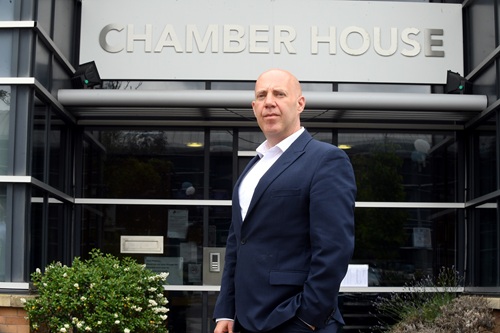
Corin Crane, chief executive of the Coventry and Warwickshire Chamber of Commerce, said firms in the region face a series of barriers to growth but uncertainty continues to be the biggest blight.
He said: “We heard from businesses after November’s Budget and there was a sense that firms were getting ready to invest and grow as they started this year so I was quite optimistic about what 2026 had in store.
“The February GDP figures and the latest unemployment numbers were both heading in the right direction but they were measuring the economy before war broke out in Iran.
“The latest inflation rate is a reflection of some of the issues we’re seeing following the outbreak of the conflict – really highlighting the tightrope businesses across our patch are walking.
“It’s becoming increasingly clear that the next 12 months are going to see higher than expected inflation and interest rates and that even if a solution is found in the Middle East, economic growth will be slow and hard to find.
“We know that Government is not in a position to mitigate all of the issues that global uncertainty brings – but it must do everything it can to enable economic growth.”
David Bharier, head of research at the British Chambers of Commerce said: “Today’s 3.3 per cent inflation figure for March is an early signal that the Iran conflict is feeding through into official data and impacting the UK economy.
“Transport is the biggest contributor, driven by the rapid rise in fuel costs, though food and household energy inflation are yet to be captured.
“But the inflationary path also reflects cost pressures that were building long before the latest shock. BCC data in Q1 showed 73 per cent of businesses were already citing labour costs and 54 per cent energy costs as inflation drivers.
“With spiralling energy costs and sustained supply chain disruption, the March inflation figure is more likely to be a floor than a peak.
“The Bank of England faces a stagflationary dilemma. Cutting rates risks embedding inflation but holding or raising them could wreak major damage on an already fragile economy.
“The government’s extension of support for energy-intensive firms is a necessary step. But it must move with similar urgency on the other major cost pressures bearing down on business, particularly business rates and employer National Insurance.
“Over the longer term, the UK will only build resilience by unlocking investment, boosting exports, and harnessing the productivity potential of AI.”