
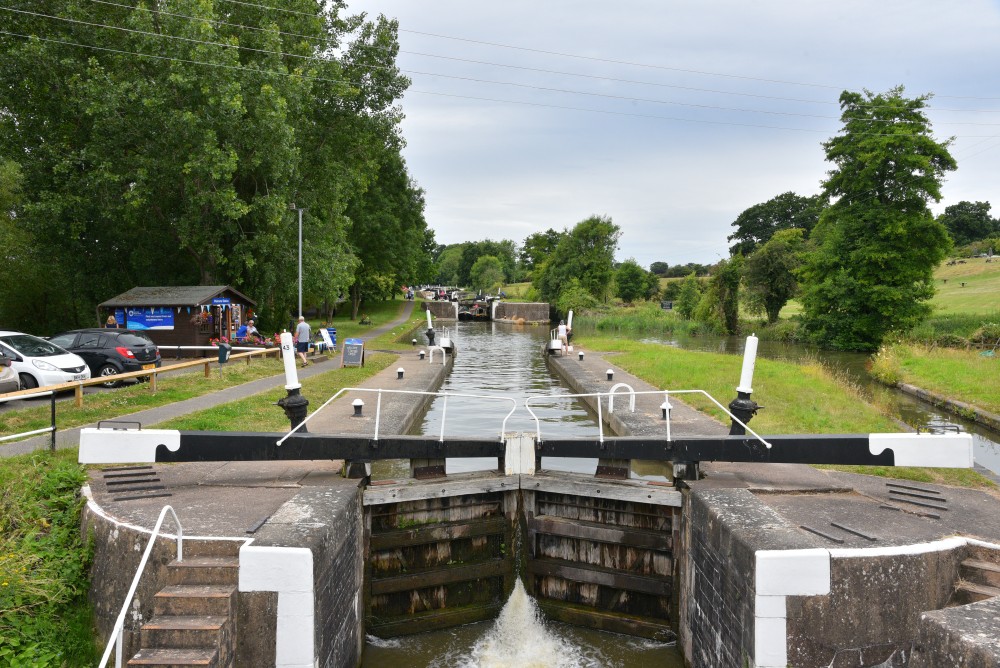
The historic flight of 21 locks and the surrounding meadow revealed an encouraging range of wildlife. In addition to much loved species such as ducks, swans, herons and kingfishers, the survey established that the canal at Hatton is also home to several species that are nationally declining.
The team discovered slow worms, a species of national conservation concern, along with adult toads and many toad tadpoles, which is a particularly welcome sight given that numbers of common toads continue to decline in the UK.
The lock flight also has significant bat activity, with species such as the common pipistrelle and the soprano pipistrelle foraging along the tree line and canal corridor at dusk.
Samantha Taylor, senior ecologist from Canal & River Trust, said: “Hatton Locks has always been a special place, but seeing toads, slow worms and active bat populations shows just how vital our canals are for wildlife. These findings highlight the importance of caring for the canal corridor both as a historic working landmark used by boats, but as a living, breathing habitat that supports species under real pressure.
“Thanks to the enthusiasm and curiosity of our volunteers, we’re building a much clearer picture of how wildlife is using the canal and surrounding meadow. That knowledge helps us protect these habitats for the future and ensures places like Hatton Locks continue to thrive.
“We’re always looking for new volunteers to join us. Anyone with a passion for nature or heritage would be incredibly welcome to help us care for the locks and wildlife that lives along the canal.”
For more information on how you can volunteer or donate money to support the Canal & River Trust visit www.canalrivertrust.org.uk