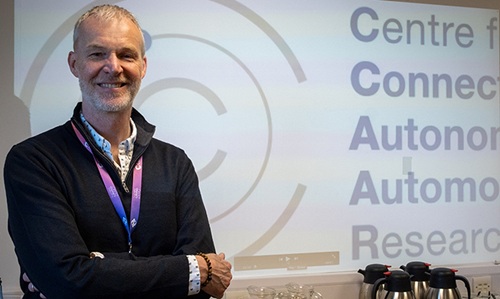
Kevin Vincent, CCAAR Director within Coventry University’s Research Centre for Future Transport and Cities, said: “There’s still a lot to do to fully realise the opportunities of connected mobility, particularly around building more resilient digital infrastructure and extending services beyond urban areas into rural communities.
“It’s becoming easier to deploy connected mobility in cities, but rural areas remain a challenge, especially for ageing populations and disabled people who may rely on improved mobility for independence.
"Inclusivity is something we’re focusing on as it’s not enough to design for solely one group, we have to ensure systems work for everyone.
“Cyber security is another growing concern - as systems become more connected, they also become more vulnerable.
As CCAAR continues to evolve, developing new talent and tackling the complex challenges ahead, this model of collaboration will be essential to accelerating innovation and bringing these technologies closer to everyday reality.”
Based at MIRA Tech Park, CCAAR allows students and researchers studying a wide range of subjects from computer science (including AI), mechanical and electronic engineering, and industrial design, access to a live testing environment where they gain hands-on experience that enables rapid translation of ideas into practical solutions.
CCAAR has also contributed to major national programmes with HORIBA MIRA, including CAM Testbed UK, resulting ASSURED CAV Highway and ASSURED CAV City facilities and Midlands Future Mobility, helping to unlock more than £60 million in investment from UK Government and industry partners.
The work has supported advances in connected and automated vehicle technologies, including the development of advanced driver assistance systems (ADAS) and digital twin testing methods.