But then she received an approach to apply for the principal job at Coventry College and decided to take on one of the biggest challenges in Further Education.
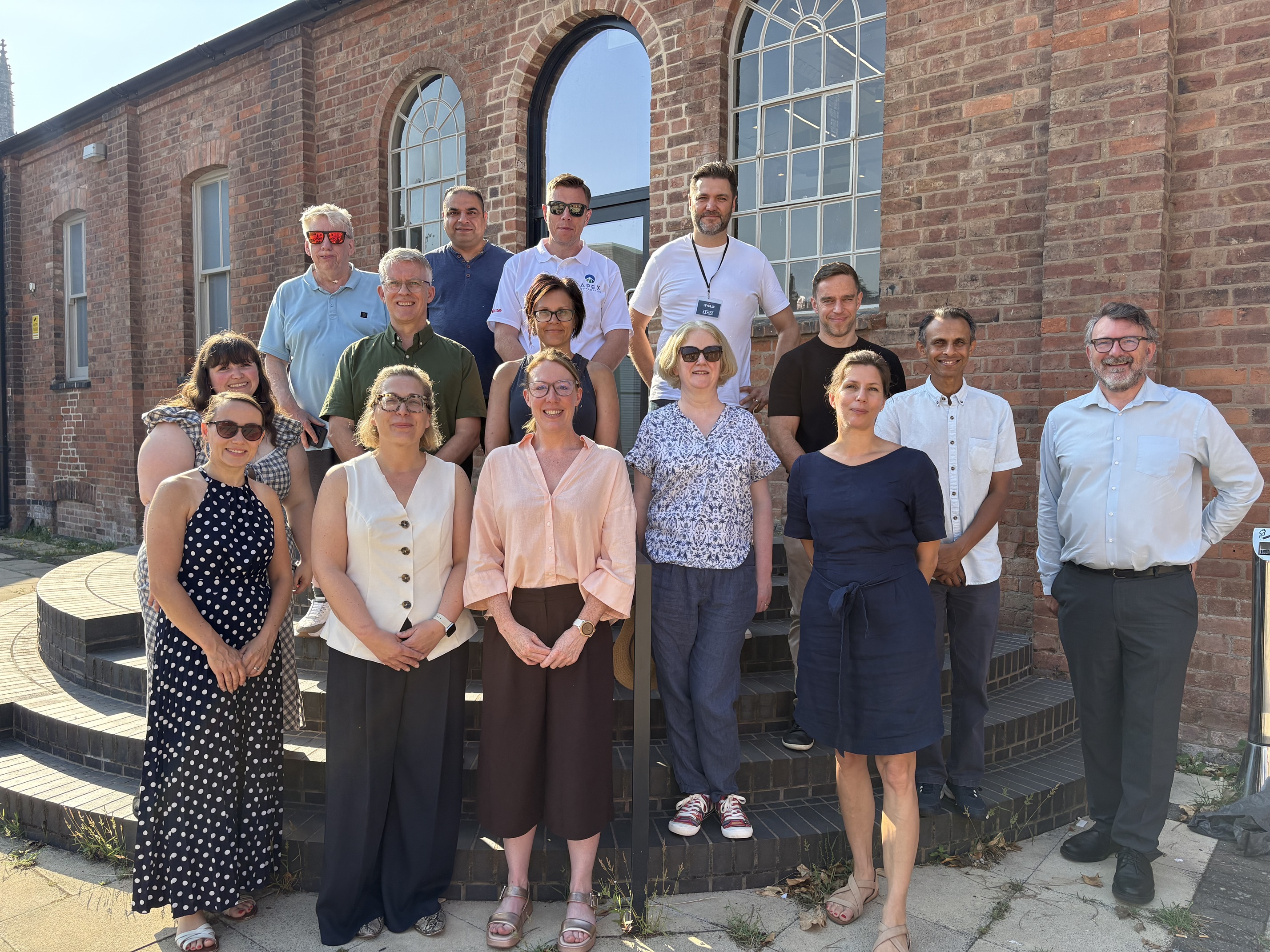
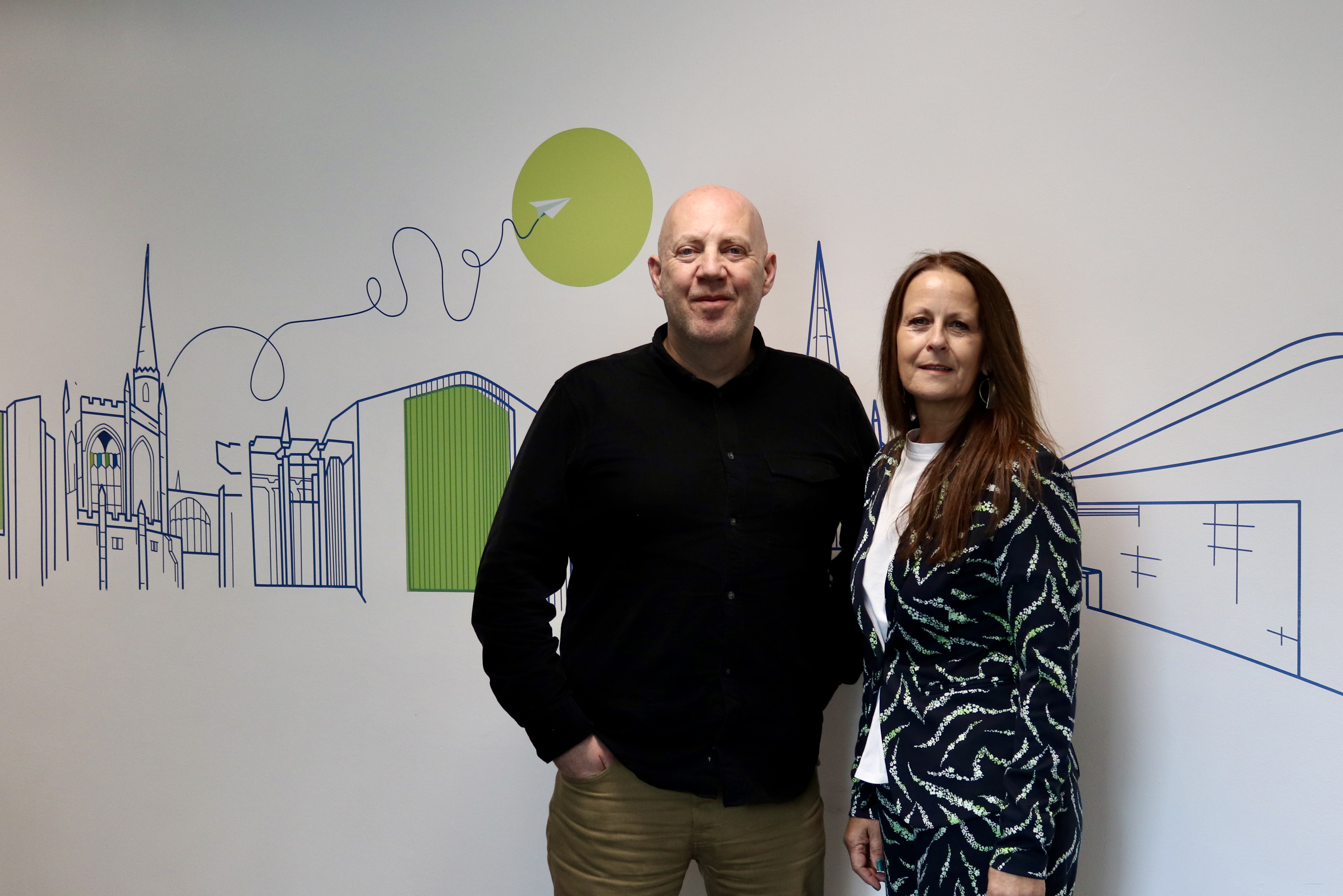
Corin Crane, chief executive of the Coventry and Warwickshire Chamber of Commerce, paid a visit to the college, which is based just outside the city centre and educates thousands of 16 to 18-year-olds as well as mature learners, to find out about the turnaround Carol has achieved in such a short space of time.
Corin Crane (CC) How long have you been at Coventry College?
Carol Thomas (CT): I started in August 2020. My previous role was Director of Curriculum and Performance at Newcastle and Stafford Colleges Group. We’d just achieved Outstanding and were the first merged college in the country to do so under the new Ofsted Inspection framework.
Then Covid hit. For the first time in my life, I was working from home and only going into work a couple of days a week as the college remained open for vulnerable learners. During lockdown, Peridot Recruitment Agency contacted me a few times and said Coventry College needed someone to lead on change management and thought I’d be the right fit for the role. At first, I said no, as I genuinely wasn’t looking and loved my role and the college, I was working in.
Put persistence prevailed and eventually, I agreed to speak to the college’s Chair of Governors via Teams, and tried to ascertain exactly what it was like to be a student at Coventry College.
I then drove down to Coventry during lockdown, and I remember there wasn’t a single car on the M6. It was really eerie. I visited both college campuses, but unfortunately was unable to even go inside the buildings, so I just looked around from the outside and thought - well at least they are not falling down!
Then, just before signing on the dotted line, the Chair of Governors rang to tell me that the bank had announced that they were about to close on the college due to breach of covenants.
I had been made aware that the college had some financial difficulties, but that was a moment, I can tell you! However, I’d already committed, handed in my notice, found somewhere to live during the week, so thought I needed to see this through.
CC: When you arrived, were you surprised by how big the leadership challenge actually was?
CT: The biggest shock was realising that there was effectively a deficit of postholders in permanent positions in key business support areas.
Prior to my appointment, there had been a CEO and a principal role running in parallel – two equivalent salaries, which clearly the college couldn’t afford. The remaining senior leaders, I understand, had either left or stepped down.
So, at one point I was managing HR, finance, MIS, curriculum and performance, safeguarding – everything other than the remit of my Assistant Principal. I was working about 70 hours per week across the two campuses, it was relentless.
CC: That must have been incredibly lonely.
CT: It was, and challenging for many reasons. As you can imagine, for a long time, every board discussion was about finance. Nothing else. I also had monthly meetings with the bank (who incidentally after two years, put the college in for an award with the Institute for Turnaround for being their fastest turnaround business) and with the ESFA, frequent Ofsted monitoring visits and monitoring visits by the Further Education Commissioner Team. Thankfully that’s all completely changed now as a result of our incredible transformation, but back then, survival was the priority.
But almost everything needed attention, which was never my initial expectation. But then it’s no surprise really, as staff had seen five principals in six years so I had a job just convincing everyone that I was actually going to stay and see this challenge through to completion.
I also knew that I had to be visible, involved, and consistent. When working on a transformation of this magnitude, you can’t just sit in an office all day and expect change to happen. You have to have absolute clarity about the vision and how to get there, and be in the thick of it – supporting, guiding, checking and reinforcing everything you are putting into place.
CC: Was there a moment when you realised people were working with you, not against you?
CT: Yes. When our Ofsted results came back this time last year.
I went into the courtyard on a Friday afternoon and there was standing room only. Even people who didn’t work Fridays came in.
I gave a little speech and told them that when I arrived, the college was inadequate for quality and financial health and was struggling with its reputation. And now Ofsted had graded us Good, with almost no recommendations – which was a huge achievement for everyone. (In fact, Ofsted made a follow up visit to ask how we had achieved the transformation).
People were crying and cheering, there was lots of hugging. It was fabulous and very overwhelming.
Later, staff started coming to me quietly to say that they knew hard decisions had been made, but they were the right ones.
One moment that will always stay with me was a member of staff who came to see me before leaving the college. She was grateful that, as a leader, I had been prepared to tell staff the truth about the college situation and how to change it. She gave me a small, personal gift as a thank you for helping to transform the college. Needless to say - I was in bits.
CC: FE isn’t just about education, is it? It’s about life chances especially in cities like Coventry.
CT: Absolutely. For many learners, if they don’t come here, then where will they go? jobs for 16-year-olds don’t exist anymore.
We have learners who are sofa-surfing, living in hotels as a family in one room, have caring responsibilities, mental health challenges, or have an Educational Health Care Plan. We actually give away food on Fridays and some students entitled to ‘free school meals’ will choose the cold option so that they can take their sandwich home to feed other members of their family, which is heart breaking to know.
We have over 300 learners declaring mental health issues and we have a huge safeguarding team at the College to support many of our students who face incredible personal challenges on a daily basis. Further Education is often called the fourth emergency service, as it is the safest place for many of our young people.
CC: You’re also really important to local businesses. Why do you think so many don’t engage.
CT: Some employers generalise unfairly about young people saying they don’t want to work and don’t want to learn. I have to challenge that however, and did so at an event recently, as we have many young people who don’t fit into that category.
We have some outstanding students here at Coventry College who choose vocational routes and meaningful work experience would really help them to progress. Employers need to work with us to access those learners, give them a chance and ‘grow their own’ in the process.
When employers do engage, the results are incredible. We’ve had a local business come in recently who heard me speak at an event, and they are really buying into the idea of work placements, master classes, guest speaking and working with the college in many other ways too.
CC: You’ve also been very focused on behaviour and professionalism.
CT: Yes. We don’t allow mobile phones in classrooms or workshops unless they’re being used for learning. The impact is huge as we’re seeing better communication, focus and engagement.
But it doesn’t happen overnight. You have to set expectations, reinforce them and make sure staff apply them consistently.
Employers want emotional intelligence so that’s people who can communicate, listen and work in teams. That starts here.
We’re now able to invest in facilities too. We’ve invested over £6 million in capital over recent years, with another £2 million this year alone. That’s studios, workshops and digital facilities too, so they are places we’re proud to show employers and potential students.
We’ve also increased staff pay significantly. Another vital component is the culture of the organisation, which means strong customer service, better internal communication and constant leadership development. We had a number of college principals visit the College recently and they commented about the quality of the experience they received, which is a huge transformation and something we are really proud of.
CC: And, ideally, where do you want the college to be in a few years?
CT: I want us to be a of college of choice, not by default, but by reputation, and also an employer of choice.
I would like to see strong, employer-backed apprenticeships, as well as expanded commercial training. We will have many more trusted partnerships with businesses and other organisations backed up by consistent improvement.
And, of course, finances matter too, so we will always have to keep a close eye on that, being the most underfunded sector in education. I am however, pleased to say that our financial health was recently rated Outstanding for the third year running.
Working in FE has and always will be relentless, but it is incredibly rewarding, as what we do really matters to our students, and impacts on the lives of their families, communities and the city as a whole.