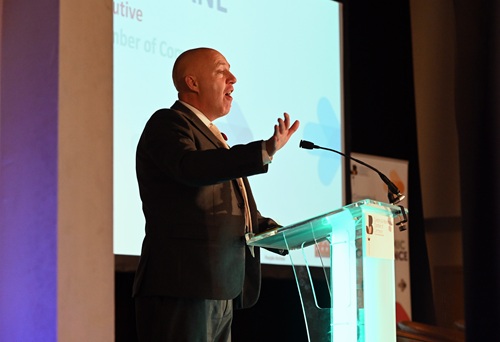
Corin Crane, chief executive of Coventry and Warwickshire Chamber of Commerce, said: “The fact that the rate of unemployment remains unchanged is, hopefully, a positive sign that the labour market is holding steady, especially after better-than-expected economic growth figures.
“But we know that 2026 has started with fresh international volatility which will, of course, be concern for businesses.
“We also know that labour costs are a huge cost pressure for firms across Coventry and Warwickshire and while wage rises have come down slightly ,they are still tracking ahead of inflation, while there are also costs associated with the new Employment Rights Act.
“It further underlines why it is so important for the Government to really ratchet up its policies that can help to deliver stronger economic growth which were outlined in its strategies announced last year.
“Coventry and Warwickshire is in a great position to be a driving force behind that growth due to the make-up of our economy and the sheer ingenuity and resilience of our businesses.”
Patrick Milnes, Head of People and Work Policy at the British Chambers of Commerce, said: “The latest data indicate businesses are still not feeling confident about taking on more staff or expanding their operations.
“The rate of unemployment has held steady at 5.1 per cent and the number of pay-rolled employees has continued to fall, suggesting the labour market is still loosening.
“Wage increases, including bonuses, held steady at 4.7%, providing little relief for businesses who have seen eye-watering growth in employment costs, and know there is still more pain to come.
“With above inflation rises in the minimum and living wage due in April, and a raft of costs associated with new employment legislation, employers will continue to hold back.
“Our most recent survey found that labour costs continue to be the main cost pressure they face, cited by 72 per cent of firms.
“The data also point to a rise in industrial action with an estimated 155,000 working days lost because of labour disputes across the UK in November 2025. This is the highest number of working days lost since January 2024.
“Added to this we now have fresh uncertainty emerging around tariffs and businesses will be looking to government for clear signs that it understands the difficulties they face.
“This means it is vital that this is the year of delivery for the Industrial, Trade and Infrastructure strategies announced in 2025.”