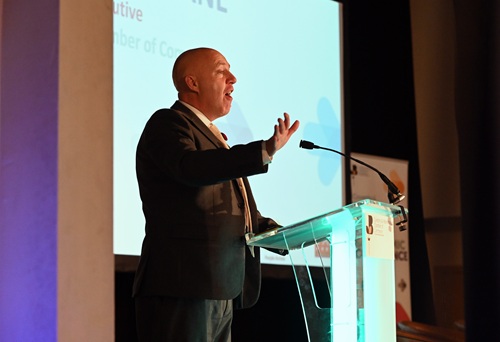
Corin Crane, chief executive of Coventry and Warwickshire Chamber of Commerce, said: “The latest figures come before the crisis in the Middle East had escalated and it’s not clear how much of an effect that is going to have on our domestic economy, although there is no doubt prices are going to rise on the back of it.
“Our colleagues at the British Chambers of Commerce are predicting an increase in unemployment this year so it’s absolutely vital that, despite everything that is happening globally, the Government accelerates our domestic plans for growth.
“Employers are facing rising costs and in an increase in regulation when it comes to employment so it’s vitally important that they can see that the plan to grow the economy is starting to work.
“From improving the planning process through to enhancing infrastructure, businesses want to see some of the barriers to economic growth removed.”
Bharier, Head of Research at the British Chambers of Commerce, said: “With unemployment at 5.2 per cent for the quarter, and expectations it will continue to rise, there are clear signs that pressure is growing on the labour market. Our latest forecast expects it to climb to 5.5 per cent this year.
“Three major factors could shape the outlook: high and rising labour costs, the proliferation of AI, and growing uncertainty caused by the conflict in Iran.
“Labour costs remain the biggest cost pressure for businesses, cited by 72 per cent in our latest quarterly survey. Last year saw a significant increase in employment NICs, and firms now face additional regulatory pressures as the Employment Rights Act comes into force.
“Targeted initiatives such as the Jobs Guarantee and Youth Jobs Grant show the government recognises the risks, but for many firms the basic barrier is the overall cost of employment.
“Our latest research shows that most SMEs are not looking to decrease headcount as a direct result of AI. But a smaller group, of around one in ten SMEs, with deeper AI integration are more likely to expect workforce reductions in the coming months. This could add to unemployment over time.
“At the same time, the conflict in Iran is set to drive higher inflation and weaker growth, raising the risk of stagflation if it is not resolved quickly.”